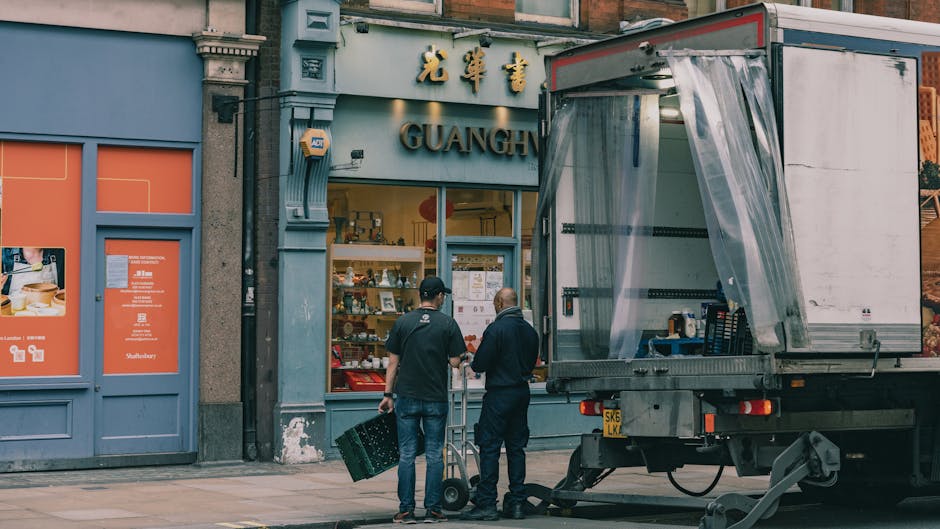
Frith Street Carnaby Street removals for tight access jobs: a practical guide for tricky central London moves
If you are planning Frith Street Carnaby Street removals for tight access jobs, you probably already know the feeling: a van cannot just pull up anywhere, the street is busy, and every extra metre of carrying matters. In this part of Soho, small access issues can turn a straightforward move into a slow, awkward day if the plan is not right. The good news is that with the right preparation, the move becomes much more manageable than it first looks. This guide explains how tight-access removals work, what to expect, and how to avoid the little mistakes that cause most of the stress.
Whether you are moving from a flat above a shop, handling an office clear-out, or shifting bulky furniture through a narrow entrance, the key is to plan for the street, the building, and the timing all at once. Sounds obvious, but that is where many jobs slip. Let's get into the practical side.
Why Frith Street Carnaby Street removals for tight access jobs Matters
Frith Street and Carnaby Street sit in one of London's most tightly packed, most active areas. That matters because removal work is not just about lifting boxes. It is about getting the vehicle in the right place, moving items safely through narrow access points, and keeping disruption low in streets that are often already busy with pedestrians, deliveries, and traffic controls.
In a tight-access job, every detail has a knock-on effect. If the van is parked too far away, carrying time increases. If the entryway is narrow, a wardrobe may need to be tilted, wrapped, or even dismantled. If the move starts at the wrong time of day, congestion can eat into the schedule before a single box has been loaded. You can probably see why a normal removal plan does not always fit here.
There is also the human side. Moving in central London can be tiring enough without dragging sofas through a side street while trying not to block everyone else's day. A properly planned approach keeps the job calmer, safer, and honestly less embarrassing when the road is tighter than expected. We have all seen the van that arrives full of confidence and then spends ten minutes circling for space. Not ideal.
Expert takeaway: in this part of London, access is the real job. The actual loading and unloading is only one part of the story.
How Frith Street Carnaby Street removals for tight access jobs Works
Tight-access removals usually begin with a quick assessment of the route. That means looking at where the vehicle can stop, how far items must be carried, whether there are steps, and if any furniture needs to be taken apart before moving. For central Soho locations, it is often a mix of street access, building entry, lift availability, and timing restrictions.
A professional removal plan normally follows a few stages. First comes the survey or pre-move discussion. This may be done in person, by phone, or through photos and measurements. Then comes vehicle planning. A smaller van, a larger van, or a man with van setup may be the better fit depending on road space and load size. After that, the packing, protection, and loading strategy are chosen around the access conditions.
For example, a flat on a narrow stairwell might call for mattress covers, corner protection, and a lifting plan for awkward items. A ground-floor business unit with a tight rear lane might need a different load sequence so the team can keep the entrance clear. Truth be told, the best removals teams think about the exit route before they even start carrying things in.
Another part of how these jobs work is timing. Early mornings often help reduce congestion, though that depends on the building and the local parking situation. If the move involves office stock or heavier furniture, a tighter schedule and a smaller loading window can make a surprising difference. You notice the rhythm of the job very quickly in Soho: short carry, steady flow, no unnecessary waiting.
Key Benefits and Practical Advantages
When tight access is handled properly, the benefits go beyond convenience. You get a move that feels controlled rather than chaotic, and that is a big deal in a dense area where delays can spread fast.
- Less carrying distance: the route from van to door is planned carefully, which reduces strain and speeds things up.
- Lower risk of damage: measured handling and better protection help avoid scuffs on walls, bannisters, and furniture.
- Better time control: a realistic access plan reduces the chance of overruns.
- Less disruption: neighbours, shopfronts, and passing foot traffic are considered in advance.
- Improved safety: narrow stairs, awkward corners, and heavy items are managed with the right equipment and approach.
There is a subtle benefit too: good planning reduces decision fatigue on the day. When a move becomes messy, people start making rushed calls. Should the bed frame come apart now or later? Can that cabinet fit through as is? Should the van move half a street down? Those are the small questions that drain energy. Good access planning keeps those questions to a minimum.
If your move is part of a bigger change, such as a flat move followed by storage or a furniture shuffle before renovation, a joined-up service can make the whole thing smoother. For example, some customers combine tight-access moving with storage or with packing and unpacking services so the day does not turn into a marathon.
Who This Is For and When It Makes Sense
This kind of removal service is not only for huge, complex moves. In fact, it is often the smaller jobs that benefit most from tight-access planning because the margins are so slim. One bad parking decision can affect the whole day.
You are likely a good fit for this approach if you are:
- moving in or out of a flat above a shop or restaurant
- dealing with a narrow staircase or awkward internal layout
- moving furniture that is heavy, fragile, or difficult to turn
- working to a fixed building slot or access window
- moving from a busy Soho street where stopping time is limited
- trying to keep disruption low for neighbours, tenants, or customers
It also makes sense if you simply want a move that feels more organised. Not every job in Frith Street or Carnaby Street is huge, but many are fiddly. And fiddly is where experience matters.
Commercial customers often need this support too. Small office teams, boutique retailers, and hospitality venues may all need careful removal planning, especially if stock, furniture, or equipment has to move through a public entrance while the business keeps running. In those cases, a service like commercial moves or office removals may be the better starting point than a standard domestic move.
Step-by-Step Guidance
Here is the practical sequence that tends to work best for tight-access removals in this part of London.
- Map the access route. Measure doorways, stair widths, turning points, and any low ceilings or awkward landings. A quick phone photo can reveal more than people expect.
- Check where the vehicle can stop. Think about loading points, waiting restrictions, nearby bays, and how far the carry will be. This is often the deciding factor.
- List the awkward items first. Sofas, wardrobes, desks, glass tables, pianos, and oversized appliances need special attention before anything else.
- Decide what should be dismantled. Some furniture is quicker and safer to break down in advance than to wrestle through a tight stairwell.
- Protect the property. Floor covers, blankets, corner guards, and door protection can prevent small damage that becomes expensive later.
- Choose the right vehicle and team size. A smaller, more manoeuvrable van can be better than a large truck if parking is limited. More people may help, but not always. It depends on the access pattern.
- Load in the right order. Keep essentials accessible and put the most awkward items in a sequence that matches the route and unloading plan.
- Build in time for surprises. In Soho, surprises are not a bug; they are part of the landscape. A delivery truck, a bin collection, or a suddenly crowded pavement can change the day fast.
A small but useful habit: walk the route once before lifting anything heavy. That little pause saves a lot of regret later. You will spot the low rail, the tight corner, the door that only opens halfway. It is a five-minute job that often saves fifty minutes.
Expert Tips for Better Results
If there is one thing that separates a smooth tight-access move from a stressful one, it is preparation detail. Not fancy detail. The ordinary, practical kind.
- Use photos, not just descriptions. A picture of the entrance, stairwell, and loading point is worth a lot. Words like "narrow" and "a bit tight" are, let's face it, wonderfully unhelpful sometimes.
- Keep boxes consistent in size. Uniform boxes are easier to stack and easier to carry through small spaces.
- Label fragile items clearly. Fragile labels only work if they are visible and the packing is actually secure. Bit of a classic, that one.
- Plan for weather. Rain turns pavements slippery and increases the chance of muddy marks on interiors. A wet morning can change the tempo of the job completely.
- Allow for lift access rules. Some buildings require booking, padding, or supervised use. Never assume a lift will be free just because it is there.
- Keep a priority bag separate. Keys, chargers, documents, medications, and a kettle if you are moving home. The kettle, especially, because nobody wants to hunt for tea bags after a long day.
One useful little trick in tight-access areas is to stage items near the exit in a controlled way, rather than piling everything in one chaotic heap. The load flows better, the team moves better, and the whole thing feels less like a scramble.
And if something feels too heavy or too awkward, stop and rethink. There is no prize for forcing a sofa through a stair corner. None at all.
Common Mistakes to Avoid
Tight-access moves usually go wrong for predictable reasons. That is actually good news, because predictable problems are easier to avoid.
- Underestimating the carry distance. "Just around the corner" can be a long way when you are carrying a chest of drawers in the rain.
- Forgetting to measure furniture. A sofa that looks fine in a room can still fail on the stair turn.
- Assuming parking will sort itself out. In central London, access planning is not optional.
- Leaving dismantling too late. If a wardrobe needs to come apart, discover that before the van is outside and everyone is waiting.
- Overpacking boxes. Heavy boxes slow the job down and make tight corners riskier.
- Ignoring building rules. Some blocks have specific move-in rules, lift booking requirements, or noise expectations.
- Not reserving enough time. A move with tight access is rarely a "quick one" just because the property is small.
The most expensive mistakes are often the simple ones. A missed parking detail. A wrongly measured piece of furniture. An entrance left unprotected. Not glamorous, but true.
Tools, Resources and Recommendations
The right tools make tight-access removals less physically demanding and much safer. You do not need a warehouse full of equipment, but a few pieces of kit can make a meaningful difference.
| Tool or resource | What it helps with | Why it matters in tight access |
|---|---|---|
| Furniture blankets and wraps | Protecting finishes and corners | Prevents scuffs in narrow hallways and stairwells |
| Dollies and trolleys | Moving heavier items | Reduces lifting over longer carry distances |
| Ratchet straps | Securing loads in the van | Stops items shifting during short, stop-start journeys |
| Door and floor protection | Shielding surfaces | Helpful where entry points are tight and traffic is constant |
| Disassembly tools | Breaking down larger furniture | Often the difference between a fit and a failure |
| Clear inventory list | Tracking items during a busy move | Useful when items are staged in small batches |
For many moves, a combination of removal van planning and packing and boxes support is enough to keep the day efficient. If you have heavier or more unusual items, specialist services such as furniture removals or piano removals may be more appropriate.
If you want a broader look at service choices and how they are positioned, the main removal services page can be a sensible place to compare the overall offering before you decide what you need.
Law, Compliance, Standards, or Best Practice
For moves in Soho, compliance is mostly about common-sense professionalism and respect for local conditions, but there are still important points to keep in mind. If you are using public roads, parking space, or access routes, you should expect local restrictions, time limits, and building rules to apply. These can change depending on the exact property and the time of day, so they should be checked in advance rather than guessed on moving morning.
Health and safety matters too. A proper move should reduce avoidable injury risk through safe lifting, suitable equipment, and careful team coordination. If a company has clear procedures, that is a good sign. You can review the provider's general approach through pages like health and safety policy and insurance and safety, which helps set expectations before anything is booked.
Customers should also expect fair communication around pricing, payment, and terms. A good quote normally explains what is included, what could change, and what happens if access turns out to be harder than first described. That transparency matters. It is not exciting, but it keeps everyone sane.
Where sustainability is a concern, some customers like to know how packing waste and unwanted items are handled. If that matters to you, the recycling and sustainability information is worth reviewing. Likewise, if you are comparing providers, the pricing and quotes page can help you understand how quotations are typically framed.
Best practice in this setting also means speaking plainly about access. If there are stairs, a narrow lane, a no-parking window, or a booking requirement for lifts, say so early. The fewer surprises, the better the job. Simple as that.
Options, Methods, or Comparison Table
Not every tight-access move needs the same approach. Here is a practical comparison of common methods.
| Method | Best for | Pros | Trade-offs |
|---|---|---|---|
| Small van with manual carry | Light-to-medium loads, restricted streets | Easy to manoeuvre, flexible parking | More trips if the load is large |
| Man with a van service | Smaller flat moves and urgent jobs | Quick to arrange, suited to compact access | May not suit very large or complex moves |
| Full removals team | Whole-property or business moves | More hands, better for awkward items | Needs stronger scheduling and access planning |
| Hybrid approach | Mixed domestic and bulky items | Balanced flexibility, often efficient | Requires clearer pre-move coordination |
If your move is mainly a small flat relocation, a flat removals approach may be enough. If it is part of a bigger household transition, home moves or house removals could fit better. The right answer depends on the access, not just the item count.
To be fair, the "best" method is rarely the biggest one. In tight Soho streets, the nimblest plan often wins.
Case Study or Real-World Example
Imagine a small two-bedroom flat near Carnaby Street with a narrow stairwell, no service lift, and a parking space several doors away. The main items are a sofa, a bed frame, a dining table, a fridge freezer, and a few boxes of personal items. Nothing outrageous. But every item has to pass a tight internal corner, and the entrance opens directly onto a busy pavement.
In a situation like that, the removal team would usually start by checking the route and identifying anything that should come apart in advance. The bed frame is dismantled, the table legs are removed, and the sofa is wrapped to protect the fabric and the walls. Boxes are staged in a sensible order so the heaviest items do not get trapped behind the lighter ones. The van is parked as close as allowed, and the carry route is kept clear.
The job does not become effortless. That would be fantasy. But it becomes orderly. Instead of a panicked shuffle, there is a sequence. Doorway, landing, stair turn, van. Doorway, landing, stair turn, van. That rhythm makes a very real difference, especially when the street is humming a bit and people are trying to pass with takeaway coffees and shopping bags.
At the end of the move, the client is less exhausted, the property is left in better condition, and the whole thing feels much less dramatic than it could have been. That is the aim. Not a perfect movie scene. Just a competent, careful move.
Practical Checklist
Use this checklist before moving day. It is the kind of thing that saves you from the "oh no, we forgot that" moment.
- Confirm the exact property address and access route
- Check stairs, lifts, narrow halls, and door widths
- Measure large furniture and note anything that may need dismantling
- Identify where the van can stop legally and safely
- Tell the movers about loading restrictions or time windows
- Protect floors, banisters, and entry points
- Pack fragile items separately and label them clearly
- Keep key documents, chargers, and essentials in a separate bag
- Review insurance, terms, and any building rules in advance
- Allow extra time for traffic, parking, and pedestrian flow
Practical summary: if your route is tight, your plan should be tighter. Measure more than you think you need to, allow more time than feels necessary, and speak up early about anything awkward. That is usually how the smoothest jobs happen.
For a quote or to discuss a move that needs careful planning, it helps to speak to a team that understands Soho access, not just general removals. A short conversation at the start can prevent a long day later. Honestly, that first five minutes is often where the whole job is won.
Get a free quote today and see how much you can save.
Conclusion
Frith Street Carnaby Street removals for tight access jobs are really about planning, patience, and the right moving method for the street in front of you. If the access is awkward, the removal does not need to be a headache. It just needs a smarter setup.
When you measure properly, choose the right vehicle, protect the property, and keep the schedule realistic, a difficult-looking move becomes perfectly manageable. Not glamorous, perhaps. But definitely manageable. And in central London, that counts for a lot.
If you are facing a move in a narrow street, a cramped stairwell, or a building with strict access rules, the best next step is simple: map the route, check the timing, and get advice before the moving day starts. Small preparation now can save a surprisingly large amount of stress later.
Sometimes that is all a good move needs - a calm plan, a steady team, and a bit of breathing room.
Frequently Asked Questions
What makes Frith Street and Carnaby Street removals difficult?
The main challenge is access. These streets can be busy, narrow, and tightly controlled, so parking, loading, and carrying furniture often take more coordination than a standard move.
Can a removal van park right outside my property?
Sometimes, but not always. It depends on road restrictions, traffic conditions, loading bays, and local building rules. It is best to check the exact stop point before moving day.
What is the best type of vehicle for tight access jobs?
A smaller, more manoeuvrable van is often the better choice for narrow central London streets. For some jobs, a man-with-a-van style setup works well because it is flexible and efficient.
Do I need to dismantle furniture before the move?
Not always, but it is often sensible for larger items such as wardrobes, beds, and tables. If an item will not comfortably pass through the route, dismantling is usually the safer option.
How can I tell if my flat has tight access?
If you have narrow stairs, small doorways, a long carry from the street, no lift, or a restricted loading point, your move probably counts as tight access. A few photos and rough measurements help a lot.
Is this kind of move more expensive?
It can be, because access issues usually mean more time, more labour, or special handling. The exact cost depends on the property, load size, and timing rather than a single fixed rule.
How early should I book a tight-access removal?
As early as possible, especially if your move depends on limited parking, a lift booking, or a narrow time window. Early planning gives you more room to solve access problems before they become urgent.
What should I tell the movers before the job starts?
Share the exact address, access route, stairs, lift details, parking limits, heavy items, and any building rules. The more accurate the information, the better the plan will be.
Can removals be done in bad weather?
Yes, but wet or windy weather can slow the job down and increase the risk of slips or surface damage. Good teams will adjust their protection and pace accordingly.
Are there special rules for moving in Soho?
There may be local parking, loading, and building access restrictions, and these should always be checked in advance. It is sensible to confirm the details with the property and the mover rather than assume.
What if my furniture will not fit through the stairwell?
If that happens, the next step is usually to dismantle the item, change the route, or use a different moving method. Forcing it is rarely worth the risk to the furniture or the building.
Can I combine storage with my tight-access move?
Yes. In fact, it can be a helpful option if your new place is not ready yet or if you need to move in stages. Storage can reduce pressure on the moving day and give you more flexibility.
If you are moving in this part of London, the hidden trick is not speed for its own sake. It is calm planning, clear information, and a team that understands the street before the first box is lifted. That is what turns a tight-access headache into a job well done.